
Music history is usually presented as a sequence of facts: albums released, charts climbed. This project takes a different approach. Instead of organizing the year from the outside in, I am treating it as something to be interpreted FROM WITHIN.
Each year becomes a kind of reading. The albums are not ranked or categorized, they are selected, almost like drawing cards from a deck. From each album, a single song reveals itself. These songs are then arranged into a sequence, not arbitrarily, but with attention to flow, contrast, and progression. The result is a playlist that functions less like a spread of songs and more like a spread of ideas.
The structure borrows loosely from tarot, not as a system of belief, but as a way of organizing interpretation. Meaning is not assigned in advance, but allowed to emerge through position, relationship, and sequence.
From there, the focus shifts to what the songs are actually saying. The lyrics are examined collectively, looking for patterns, contradictions, and recurring themes. In some cases, I will also consider the astrological signs of the artists, not as a rigid system, but as an additional layer of archetypal context.
The goal is not to arrive at a definitive interpretation, but to observe what emerges when the year is allowed to speak for itself. What appears first? What follows? Where does it lead?
I am beginning with 1967 for a specific reason. It is the point where youth culture asserts itself not as a subset, but as a dominant force, shaping not only sound but perspective. It is also the year in which the long-playing record fully emerges as an art form…something intended to be experienced as a whole rather than consumed in fragments. Taken together, these shifts make 1967 less of a continuation and more of a threshold.
1967 – The Spread (Listen Before, During or After—-Or Not at All)
Act I – Awareness Breaking
Three voices step forward to open the year—each grounded in a different kind of perception, each shaped by a distinctly different internal compass.
1.) Mr. Soul – Buffalo Springfield
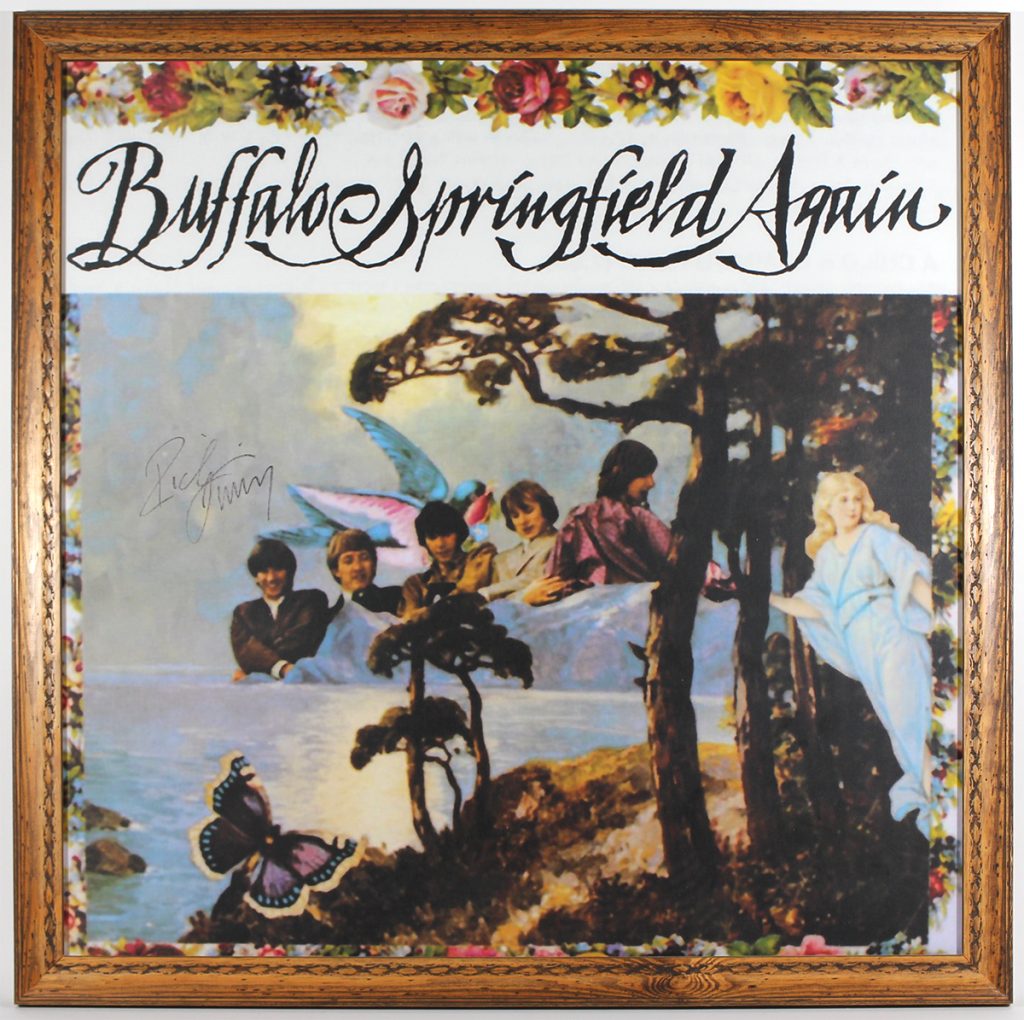
There’s nothing celebratory about “Mr. Soul.” If anything, it feels like a warning disguised as a pop song.
Young approaches fame and identity with a Scorpio lens…suspicious, probing, unwilling to accept surface-level narratives. Scorpio energy doesn’t trust what it sees. It assumes there’s always something beneath, something hidden, something slightly rotten at the core. And in “Mr. Soul,” that instinct feels justified. The song doesn’t accuse directly. It simply refuses to believe the illusion.
2. Break on Through (To the Other Side) – The Doors

Where Scorpio questions, Sagittarius acts.
“Break on Through” doesn’t linger in uncertainty…it pushes forward, almost impatiently. Morrison channels a distinctly Sagittarian drive: movement, expansion, experience at all costs. If there’s another side, the only logical response is to get there.
But there’s an interesting tension here. Sagittarius seeks truth, but often assumes that motion itself leads to meaning. Morrison doesn’t yet know what’s waiting on the other side…only that staying put is not an option. If “Mr. Soul” opens the door to doubt, “Break on Through” kicks it off the hinges.
3. I Can See for Miles – The Who

And then comes certainty…or at least the claim of it.
“I Can See for Miles” is built on a paradox. It presents itself as clarity, even dominance: I see everything. Nothing is hidden. Nothing escapes perception.
But filtered through a Taurus mindset, this “clarity” feels less like insight and more like possession. Taurus energy wants stability, control, something firm to stand on. In a year where everything is beginning to shift, that desire hardens into assertion. The result is a kind of defensive awareness. If I can see everything, then nothing can threaten me. If I understand it all, then I remain grounded.
By the end of Act I, the pattern is clear:
- Awareness begins with suspicion
- Escalates into action
- And settles, albeit briefly, into assumed clarity
But none of it holds. Because what comes next isn’t more understanding…it’s expansion. And once that door opens, there’s no guarantee of structure on the other side.
Act II – Expansion / Dissolution
If Act I is about awareness, Act II is what happens when that awareness is no longer containable. But expansion isn’t inherently enlightening. It can just as easily disorient. What begins as curiosity quickly becomes immersion, and immersion doesn’t always come with a map.
This is where 1967 stops asking questions and starts altering perception itself.
4. White Rabbit – Jefferson Airplane

If Neil Young’s Scorpio energy in Act I was suspicious and internal, Grace Slick’s version is directive.
“White Rabbit” doesn’t describe altered consciousness…it instructs it. There’s no ambiguity in tone, no hesitation. The song builds with a sense of inevitability, as if the outcome has already been decided. Scorpio here isn’t questioning what lies beneath, it’s leading you there.
There’s also a subtle shift in authority. The voice is calm, controlled, almost clinical. It doesn’t feel reckless. It feels…intentional. Which may be more unsettling. This is the moment where expansion stops being accidental and becomes deliberate participation.
5. I Don’t Live Today – The Jimi Hendrix Experience

Where Morrison pushed forward, Hendrix dissolves the ground entirely.
Sagittarius energy typically seeks meaning through movement and experience, but here it reaches a kind of overload. The present moment becomes unstable, something to escape rather than inhabit. “I Don’t Live Today” feels less like a statement and more like a condition. Time itself is fractured. Identity is no longer anchored. The past, present, and future blur into something indistinct.
If “Break on Through” was the decision to cross the threshold, this is what happens when you realize there’s no clear structure on the other side. Sagittarius keeps moving, but now it’s not clear where or why.
6. Sunshine of Your Love – Cream

“Sunshine of Your Love” is grounded, repetitive, physical. Where the previous two songs expand and destabilize, this one pulls everything back into a simple, undeniable groove.
That grounding isn’t accidental. While Clapton brings the Aries immediacy…direct, instinctual, forward-moving, it’s Jack Bruce’s Taurus influence that locks the song into place. Taurus doesn’t drift. It holds. It repeats. It builds something you can stand on. The result is a kind of physical anchor in the middle of psychological disorientation.
Desire becomes tangible again. Rhythm becomes structure. The riff doesn’t just carry the song…it stabilizes it. But it’s not a full return to order. It’s more like finding something solid to grip while everything else remains in motion.
By the end of Act II:
- Expansion becomes instruction
- Experience becomes disorientation
- And the body becomes the last remaining anchor
But even that won’t hold forever. Because what follows isn’t more expansion…it’s reckoning.
And once the experience fades, what’s left is the question no one can avoid: What did any of it actually mean?
Act III – Reflection / Integration
Expansion doesn’t last. At some point, the intensity fades, the edges return, and whatever was experienced, clearly or not, has to be processed. Act III isn’t about discovery. It’s about aftermath.
What remains after the awareness, after the expansion, is something quieter but more difficult: reflection. Not everything resolves cleanly. In fact, most of it doesn’t. 1967 doesn’t end with clarity. It ends with interpretation.
7. Death of a Clown – The Kinks
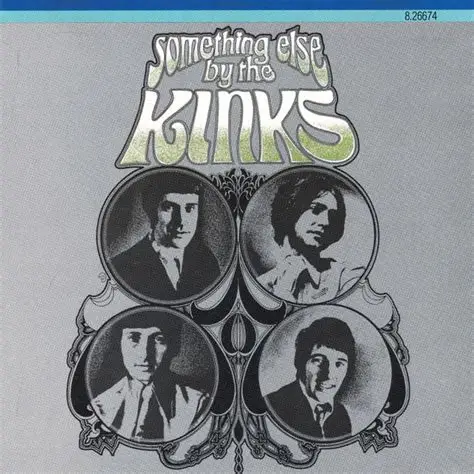
If the earlier acts destabilized identity, “Death of a Clown” sits with what’s left of it.
Aquarius tends to observe from a distance, to detach just enough to see the structure behind the performance. And here, the performance is the point. The clown isn’t just a character…it’s a role that’s been played too long. There’s no dramatic collapse, no explosive realization. Just a quiet acknowledgment that something once held together no longer does.
Aquarius doesn’t mourn in a conventional sense. It recognizes patterns, even when they’re uncomfortable. And in this case, the pattern is simple: the act is over, but the person underneath isn’t entirely sure what remains.
8. Nights in White Satin – The Moody Blues
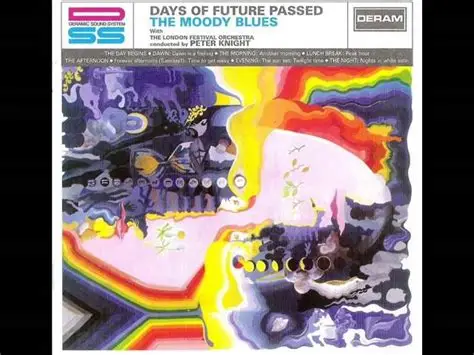
Where Aquarius detaches, Libra reflects.
“Nights in White Satin” stretches emotion across time, smoothing it out, trying to make sense of it through feeling rather than analysis. Libra seeks balance, but here the balance never quite arrives. The longing remains suspended, unresolved. There’s a dreamlike quality…not as an escape, but as a softening mechanism. Reality is still present, but it’s filtered, reframed, made more bearable.
Libra doesn’t force conclusions. It lingers. It replays. It searches for harmony even when it’s no longer available. And in that way, the song doesn’t resolve anything, it simply holds the emotion in place, preserving it.
9. A Day in the Life – The Beatles

Leave a Reply