
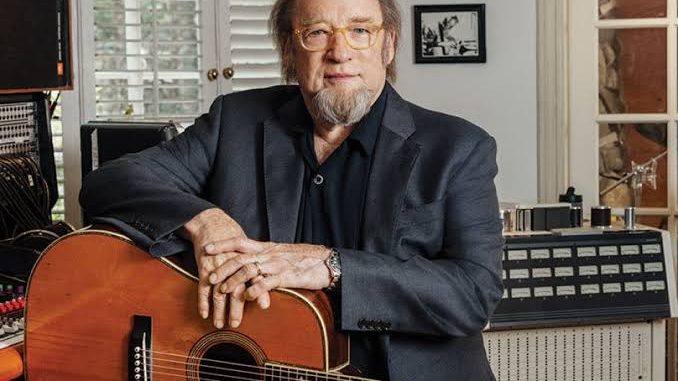
I normally don’t include an introduction to these Listopia posts, but it feels oddly appropriate that Stephen Stills’ debut solo album includes a guest appearance by Eric Clapton, because I have long suspected those two musicians suffer from a similar artistic condition.
Both are undeniably gifted. Both helped define more than one important musical moment. Both could be electrifying when surrounded by the right collaborators. And both, when left entirely to their own devices, showed a dangerous tendency to wander into the tall grass of tasteful competence.
In a band, Stills could be pushed, challenged, edited, framed, and occasionally rescued from himself. Buffalo Springfield gave him tension. CSN gave him harmonies and competition. CSNY gave him Neil Young lurking nearby like a Canadian storm cloud with a guitar. Manassas gave him a working musical ecosystem big enough to contain his genre-hopping impulses.
Solo Stills, however, is a much more uneven proposition. The talent never disappears. That may actually be the problem. He could play, arrange, sing, write, produce, and generally stock an entire record with enough musicianship to make even mediocre songs sound respectable. But respectability is not the same thing as greatness. Too often, the solo catalog feels like a brilliant musician walking confidently into the studio without anyone at the door asking, “Are we sure this one needs to be seven minutes?”
I will make no grand attempt to explain why this happens. Psychology is above my pay grade, and the evidence has already been pressed onto vinyl for future civilizations to misfile. But the pattern is hard to miss: Stephen Stills was at his best when he had friction, foils, limits, and other strong personalities in the room.
Left alone, he remained talented.
Surrounded, he became dangerous.
40. “Run from Tears”
A respectable mid-level CSN track, but even among the chosen forty it feels more like sturdy adult-rock machinery than inspired songwriting.
39. “Soldier”
Serious-minded and sincere, but a little heavy-footed. Stills sounds committed, yet the song never quite turns concern into revelation.
38. “As I Come of Age”
A decent reflective piece with good intentions, but it feels more like Stills trying to write a major statement than actually landing one.
37. “Anyway”
Gentle, melodic, and likable, though modest. A good Manassas album track, but not one of the songs that makes the Stills case by itself.
36. “Medley: Rock & Roll Crazies / Cuban Bluegrass”
Fun, loose, and very Manassas. It showcases Stills’ range better than his songwriting, but the performance has enough life to justify inclusion.
35. “Hung Upside Down”
Psychedelic Springfield atmosphere carries this more than the composition itself. Interesting, slightly bent, and very period-specific.
34. “Sit Down, I Think I Love You”
A charming early Stills pop-rock song. Hooky and bright, though still more promising than profound.
33. “Haven’t We Lost Enough?”
One of the better late-period CSN/Stills songs. Not a masterpiece, but it has real feeling and avoids the worst late-career autopilot.
32. “Isn’t It About Time”
A strong Manassas-era rocker with urgency and social bite. Not elegant, but it has purpose and movement.
31. “See the Changes”
Graceful and thoughtful, if not thrilling. This is Stills in mature craftsman mode, before craftsmanship fully turned into wallpaper.
30. “Old Times Good Times”
A good groove, great players, and a strong early-solo statement. More feel than deep songcraft, but the feel is worth something.
29. “Sit Yourself Down”
Warm, catchy, and highly enjoyable. It is not one of his profound pieces, but it reminds you that Stills could write an easy, satisfying hook.
28. “Do for the Others”
Lovely, restrained, and sincere. One of the better quiet songs from the early solo period, with more heart than flash.
27. “Word Game”
Blunt, angry, and socially pointed. It is not subtle, but the intensity gives it more staying power than many of his smoother songs.
26. “Both of Us (Bound to Lose)”
A strong Manassas piece: sad, well-played, and emotionally credible. It does not dominate the catalog, but it deepens it.
25. “Song of Love”
Big, confident, and forceful. Not Stills at his most subtle, but a strong announcement of what Manassas could do.
24. “Dark Star”
Smooth, stylish, and genuinely enjoyable. Not especially deep, but one of the better examples of Stills making adult sophistication work.
23. “Everydays”
Cool, jazzy, and harmonically slippery. It does not fully explode, but it shows the more sophisticated musical mind hiding inside early Stills.
22. “49 Bye-Byes”
Messy, ambitious, and alive. It is not as perfectly constructed as his best work, but the early CSN energy is undeniable.
21. “You Don’t Have to Cry”
Beautiful, intimate, and foundational to the CSN sound. Slightly overshadowed by the giants around it, but still essential early Stills.
20. “It Doesn’t Matter”
A gorgeous Manassas-associated song with aching melodic strength. Even with Richie Furay’s presence in the mix, it belongs in the Stills story.
19. “Colorado”
Warm, pastoral, and deeply suited to the Manassas landscape. One of Stills’ better country-rock moments.
18. “Treetop Flyer”
The rare late-career Stills song that feels fully alive. It has character, narrative, atmosphere, and a reason to exist.
17. “Change Partners”
Elegant, wistful, and beautifully constructed. This is Stills the craftsman operating near the top of his solo powers.
16. “The Treasure (Take One)”
Long and exploratory, but for once the sprawl feels earned. A strong example of Stills stretching out without merely filling space.
15. “Pretty Girl Why”
Gorgeous, strange, and more sophisticated than it first appears. One of the clearest examples of Stills’ melodic and harmonic imagination.
14. “Woodstock”
Not a Stills composition, but the CSNY performance is too central to ignore. It is grand, ominous, and myth-making in exactly the way the era wanted to hear itself.
13. “Black Queen”
Raw, bluesy, cocky, and alive. Stills sounds like he might either finish the song or fight the microphone, and that danger helps.
12. “Southern Cross”
Later, slicker, and more polished than the early classics, but it lands. A durable mature anthem with a chorus big enough to survive decades of boat shoes.
11. “Love the One You’re With”
Overplayed, yes. Obvious, yes. But also undeniable: a huge hook, a great groove, and the rare solo Stills song that became part of the cultural furniture for good reason.
10. “Wooden Ships”
Eerie, cinematic, and post-apocalyptic in a way that still feels unusual. A co-written piece, but one of the essential CSNY monuments.
9. “So Begins the Task”
Graceful, regretful, and emotionally direct without becoming melodramatic. One of the finest Manassas-era songs and a major Stills composition.
8. “Rock & Roll Woman”
Dreamy, melodic, and beautifully shaped. One of the great Buffalo Springfield tracks and a major example of Stills’ gift for luminous folk-rock.
7. “Johnny’s Garden”
Pastoral Stills at his best: grounded, humane, and quietly beautiful. It is one of the strongest arguments for Manassas as more than a side road.
6. “4 + 20”
Sparse, haunted, and devastating. Stills without armor, and one of the few songs where his restraint is the whole point.
5. “Carry On”
Propulsive, ambitious, and brilliantly assembled. The earlier “Questions” material becomes something larger here: a full CSNY engine firing on all cylinders.
4. “For What It’s Worth”
The song that became bigger than its author. It is simple, direct, unforgettable, and so culturally absorbed that it is easy to forget how perfectly built it is.
3. “Bluebird”
Mystical, sharp, and restless. Folk-rock, guitar bite, open-road atmosphere, and modal mystery all collide into one of Stills’ finest achievements.
2. “Helplessly Hoping”
A miniature masterpiece. The writing is delicate, the harmonies are immaculate, and not a note seems wasted.
1. “Suite: Judy Blue Eyes”
The cathedral. Ambitious, melodic, harmonically rich, structurally daring, emotionally alive, and still the clearest proof that Stephen Stills could be absolutely brilliant when inspiration and discipline arrived at the same address.
Leave a Reply