
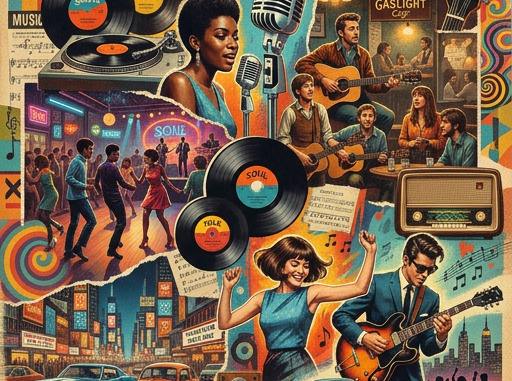
A Century of Song: The 1960s – Hour One
Popular music history has a peculiar habit of treating decades as though somebody flipped a switch at midnight on New Year’s Eve. The 1950s supposedly belonged to rock and roll, while the 1960s ushered in an entirely new musical universe. But as we discovered during our journey from the 1940s into the 1950s, musical revolutions rarely respect the calendar. They unfold gradually, with yesterday’s established performers working alongside tomorrow’s innovators, often producing some of their finest recordings in the process.
Our opening hour of the 1960s makes that point rather beautifully.
Consider Elvis Presley, whose two appearances here might surprise anyone expecting the King of Rock and Roll to have exhausted his musical significance during the previous decade. Yet “It’s Now or Never” and “Suspicious Minds” demonstrate two very different sides of an artist whose finest moments were hardly confined to his original revolution. The latter, arriving in 1969, also reminds us just how much musical territory could be covered in ten years.
The decade also brought extraordinary achievements from artists whose lives were tragically cut short. Patsy Cline’s “Crazy” remains a breathtaking example of vocal vulnerability and emotional precision, while Sam Cooke’s contributions demonstrate a performer whose effortless elegance and remarkable musical instincts seemed destined for even greater accomplishments. Neither lived to see the decade through, leaving us to wonder what extraordinary music might have followed.
Elsewhere, the musical landscape is wonderfully crowded. Professor Longhair and Fats Domino keep the New Orleans tradition bubbling, Howlin’ Wolf and Big Mama Thornton remind us that the blues has lost none of its authority, and Curtis Fuller and Kenny Burrell demonstrate that jazz continues to thrive without demanding everybody’s undivided attention. Dion, the Drifters, Jackie Wilson, and the Isley Brothers bring their own particular brands of irresistible popular entertainment.
And then there’s Mel Tormé.
Yes, Mel Tormé. Apparently, even the Velvet Fog managed to drift into the 1960s and discover a groove. His deliciously unexpected “Comin’ Home Baby” serves as a reminder that musical reputations can be wonderfully misleading. Sometimes the most surprising discoveries come from performers we thought we had already figured out.
What emerges from these twenty selections isn’t the sound of one musical era abruptly replacing another. It’s the sound of numerous traditions evolving, overlapping, and occasionally colliding, producing a decade whose creative possibilities were expanding faster than anyone could reasonably keep track of.
The British Invasion, psychedelia, and the more radical musical experiments still have their places in the story. But before we reach for the lava lamps and electric sitars, it’s worth remembering that the 1960s began with an extraordinary amount of great music already in motion.
The revolution didn’t arrive overnight. It had been warming up for years…and, as this opening hour demonstrates, it was already sounding magnificent.
| # | Song | Artist | Year |
|---|---|---|---|
| 1 | Big Chief | Professor Longhair | 1965 |
| 2 | Perfidia | The Ventures | 1960 |
| 3 | It’s Now or Never | Elvis Presley | 1960 |
| 4 | Comin’ Home Baby | Mel Tormé | 1962 |
| 5 | Crazy | Patsy Cline | 1961 |
| 6 | The Wanderer | Dion | 1961 |
| 7 | Five Spot After Dark | Curtis Fuller | 1960 |
| 8 | (What a) Wonderful World | Sam Cooke | 1960 |
| 9 | Built for Comfort | Howlin’ Wolf | 1963 |
| 10 | Soul Bossa Nova | Quincy Jones | 1962 |
| 11 | The Race is On | George Jones | 1964 |
| 12 | Under the Boardwalk | The Drifters | 1964 |
| 13 | Midnight Blue | Kenny Burrell | 1963 |
| 14 | Bring It On Home to Me | Sam Cooke | 1962 |
| 15 | Feeling Good | Nina Simone | 1965 |
| 16 | Let the Four Winds Blow | Fats Domino | 1961 |
| 17 | Higher and Higher | Jackie Wilson | 1967 |
| 18 | Wade in the Water | Big Mama Thornton | 1968 |
| 19 | Suspicious Minds | Elvis Presley | 1969 |
| 20 | It’s Your Thing | The Isley Brothers | 1969 |

Big Chief – Professor Longhair (1965)
There’s something wonderfully appropriate about opening our journey through the 1960s with Professor Longhair, a musician whose eccentric genius helped shape the distinctive sound of New Orleans long before the decade began. “Big Chief” is a magnificent collision of rolling piano rhythms, infectious percussion, and the irresistible musical personality of a city that has never shown much interest in following anybody else’s rules. Originally associated with the city’s Mardi Gras Indian traditions, the song captures the exuberance and rhythmic complexity that made New Orleans such an extraordinary incubator of American popular music. Longhair’s unmistakable piano style combines blues, boogie-woogie, and Caribbean influences into something that sounds simultaneously ancient and remarkably fresh. There’s an almost hypnotic quality to the groove, as though the entire city has decided to join an impromptu street parade. It’s a gloriously unconventional way to begin the decade…and a reminder that some of the most exciting musical revolutions were already underway before anybody thought to give them a name.
Perfidia – The Ventures (1960)
The Ventures demonstrate that rock and roll didn’t necessarily require a charismatic singer, a rebellious attitude, or even a single word to make its presence felt. Their instrumental interpretation of “Perfidia,” a romantic Latin American standard, transforms a familiar melody into a wonderfully atmospheric showcase for the emerging electric guitar sound. With its crisp, shimmering guitar lines, steady rhythmic propulsion, and beautifully controlled arrangement, the recording captures the youthful excitement of early instrumental rock without sacrificing the elegance of the original composition. There’s something particularly appealing about the way the Ventures combine technical precision with an almost effortless sense of cool, allowing the melody to do the emotional heavy lifting. Their distinctive sound would help establish the vocabulary of surf rock and influence countless aspiring guitarists throughout the decade. It’s also a perfect illustration of our recurring theme: musical revolutions frequently begin not by abandoning the past, but by plugging it into an amplifier.
It’s Now or Never – Elvis Presley (1960)
Anyone inclined to dismiss Elvis Presley as a purely 1950s phenomenon should spend a few minutes with “It’s Now or Never.” Drawing its melody from the Italian standard “O Sole Mio,” the recording finds Elvis exchanging his youthful rock-and-roll swagger for something considerably more sophisticated, delivering a magnificent vocal performance that demonstrates both his remarkable range and his growing musical maturity. The arrangement is lush and romantic, but it’s Elvis’s commanding voice that elevates the song beyond conventional pop sentimentality. His effortless movement from intimate tenderness to soaring dramatic intensity reveals a singer capable of considerably more than shaking his hips and upsetting the parents. Released shortly after his return from military service, the recording also signals an important transition in his career, proving that the original rock-and-roll rebel could successfully navigate a changing musical landscape. The revolution may have made him famous, but performances like this remind us that genuine talent doesn’t expire when the revolution ends.
Comin’ Home Baby – Mel Tormé (1962)
Well, well, well. Look who wandered into the 1960s wearing an entirely different musical wardrobe. Mel Tormé, affectionately known as the Velvet Fog, apparently decided that sophisticated crooning wasn’t nearly as much fun as getting down and dirty with a seriously infectious jazz groove. “Comin’ Home Baby” finds him navigating a slinky, bass-driven arrangement with extraordinary rhythmic confidence, trading phrases with the female backing singers while sounding like a man who has suddenly discovered an entirely new reason to enjoy his profession. The performance is playful, stylish, and surprisingly funky, revealing a side of Tormé that his more conventional recordings rarely suggested. Yet his impeccable timing and effortless vocal control remind us that the underlying talent was always there. It’s one of those delightful discoveries that makes exploring musical history so rewarding. Apparently, the Velvet Fog wasn’t quite as harmless as his reputation suggested. Sometimes, when the fog lifts, there’s something genuinely exciting underneath.
Crazy – Patsy Cline (1961)
Few recordings capture the exquisite agony of unrequited love quite as beautifully as Patsy Cline’s “Crazy.” Written by a young Willie Nelson, the song combines an unforgettable melody with lyrics that acknowledge the irrationality of romantic devotion without offering the slightest hope of escaping it. Cline’s extraordinary vocal performance transforms that emotional predicament into something almost unbearably elegant, effortlessly balancing vulnerability, resignation, and quiet dignity. Her rich, expressive voice moves through the sophisticated arrangement with remarkable control, demonstrating why her appeal extended far beyond the traditional boundaries of country music. There’s no melodramatic pleading here, just the devastating clarity of someone who understands her situation perfectly and remains helpless to change it. Cline’s death in a 1963 plane crash, at just thirty years old, makes recordings like this especially poignant. We can only imagine the extraordinary music she might have created as the decade unfolded. Fortunately, she left us something timeless…and a standard of emotional honesty that countless singers have struggled to match ever since.

The Wanderer – Dion (1961)
Dion brings a wonderfully cocky swagger to “The Wanderer,” a rock-and-roll classic that celebrates romantic irresponsibility with such infectious enthusiasm that it’s almost impossible to object. Built around a driving rhythm, an irresistible melody, and Dion’s unmistakably streetwise vocal delivery, the song introduces a young man whose extraordinary confidence is matched only by his inability to remain interested in any particular woman for very long. There’s something delightfully mischievous about the performance, although beneath its carefree exterior lies a portrait of someone who may be considerably lonelier than he’s willing to admit. Dion’s combination of doo-wop sophistication and emerging rock-and-roll attitude makes the recording particularly compelling, capturing a moment when popular music was beginning to develop a more rebellious personality. It’s cheeky, energetic, and magnificently entertaining. Whether our wandering hero deserves admiration, sympathy, or a restraining order is another question entirely. Fortunately, the music gives us plenty of reasons to enjoy his company without endorsing his behavior.
Five Spot After Dark – Curtis Fuller (1960)
Curtis Fuller brings a wonderfully sophisticated sense of cool to “Five Spot After Dark,” a swinging jazz composition that captures the atmosphere of a smoky New York nightclub without requiring a single word. Fuller’s rich, expressive trombone provides a distinctive voice amid the crisp horn arrangements and effortlessly flowing rhythm section, creating a performance that’s both musically intricate and immediately inviting. There’s a marvelous sense of conversation among the musicians, with each instrumental phrase contributing to a lively exchange that never sacrifices melody for technical showmanship. The recording demonstrates just how accessible modern jazz could be when exceptional musicians combined their talents with a memorable tune and an irresistible groove. It’s stylish, confident, and remarkably easy to enjoy, even for listeners who might ordinarily approach jazz with a certain amount of trepidation. And despite the title, there’s nothing particularly dark about the experience. This is the sort of after-hours establishment where you’d happily stay until somebody finally remembered to turn on the lights.
(What a) Wonderful World – Sam Cooke (1960)
Sam Cooke makes falling in love sound like the simplest and most wonderful discovery imaginable in “(What a) Wonderful World,” a delightful recording that combines youthful innocence with the effortless sophistication of one of popular music’s greatest voices. The song’s charming confession of academic incompetence becomes an irresistible declaration that romantic devotion matters considerably more than mathematics, history, or scientific knowledge. Cooke’s warm, beautifully controlled vocals glide through the melody with such natural grace that the entire performance seems almost impossibly easy. Yet beneath that apparent simplicity lies extraordinary musical craftsmanship, from the playful lyrical construction to the gentle rhythmic arrangement and Cooke’s impeccable phrasing. It’s a perfect example of his remarkable ability to bridge gospel, rhythm and blues, and mainstream pop without sacrificing his distinctive personality. Tragically, Cooke’s life would end just four years later, leaving behind a catalog that only hints at what his astonishing talent might ultimately have achieved. At least he understood one important subject perfectly: the extraordinary power of a great love song.

Built for Comfort – Howlin’ Wolf (1963)
Howlin’ Wolf was never going to win any awards for romantic delicacy, and “Built for Comfort” makes it abundantly clear that he wasn’t particularly interested in trying. With his enormous, gravel-soaked voice and gloriously unapologetic delivery, Wolf celebrates the virtues of a man whose physical dimensions might not satisfy conventional expectations, but whose confidence remains absolutely unshakable. The song’s swaggering blues groove provides the perfect accompaniment to his wonderfully earthy sense of humor, transforming what might otherwise sound like a defensive explanation into a magnificent declaration of self-assurance. There’s something irresistible about Wolf’s refusal to apologize for being exactly who he is, especially when the music behind him sounds so deliciously menacing. His extraordinary vocal presence and commanding rhythmic instincts demonstrate why he became such an influential figure in electric Chicago blues. Apparently, while other performers were busy cultivating youthful sex appeal, Howlin’ Wolf had already discovered a considerably more practical philosophy. He wasn’t built for speed. He was built for comfort…and evidently had no complaints from the customers.
Soul Bossa Nova – Quincy Jones (1962)
Quincy Jones demonstrates that musical sophistication and outright silliness can coexist magnificently in “Soul Bossa Nova,” an instrumental so infectiously playful that resisting its charms seems almost unreasonable. Blending Brazilian bossa nova rhythms with American jazz, brassy orchestration, and an irresistibly mischievous flute melody, Jones creates a musical concoction that sounds like a cocktail party suddenly invaded by a particularly enthusiastic marching band. The arrangement practically bursts with personality, revealing his extraordinary gift for combining diverse musical influences into something immediately accessible and unmistakably entertaining. Beneath the apparent frivolity lies meticulous craftsmanship, with every instrumental flourish contributing to the recording’s delightful rhythmic momentum. Decades later, its association with the Austin Powers films would introduce the tune to an entirely new generation, but its appeal hardly depends on cinematic nostalgia. It’s a marvelous reminder that great musicians don’t always need to sound serious to accomplish something remarkable. Sometimes genius arrives wearing a ridiculous grin…and carrying a flute.
The Race Is On – George Jones (1964)
George Jones turns romantic heartbreak into a sporting event with “The Race Is On,” a wonderfully spirited country classic that somehow manages to sound positively exuberant while describing emotional devastation. Built around a galloping rhythm, lively instrumentation, and a brilliantly extended horse-racing metaphor, the song captures the peculiar contradiction at the heart of so much great country music: the sadder the story, the more irresistible the entertainment. Jones delivers the lyrics with his extraordinary combination of vocal precision, emotional sincerity, and unmistakable personality, effortlessly navigating the melody’s twists and turns without ever losing his conversational charm. There’s genuine anguish beneath the playful arrangement, but Jones understands that heartbreak doesn’t always require a slow tempo and a box of tissues. Sometimes it arrives at full gallop. It’s a terrific demonstration of his remarkable ability to make even the most familiar romantic misfortunes sound fresh and compelling. Apparently, love is a competitive sport…and George has just watched his horse finish dead last.

Under the Boardwalk – The Drifters (1964)
Few recordings capture the carefree romance of an American summer quite as beautifully as the Drifters’ “Under the Boardwalk.” With its gently swaying rhythm, shimmering orchestration, and wonderfully evocative melody, the song transports listeners to a seaside retreat where the heat of the afternoon gives way to the considerably more interesting possibilities waiting beneath the wooden planks. Johnny Moore’s warm, expressive lead vocal conveys an effortless intimacy, while the group’s elegant harmonies and the arrangement’s subtle Latin influences create an atmosphere that’s simultaneously sophisticated and delightfully relaxed. What makes the recording especially remarkable is its ability to suggest an entire world with just a handful of familiar images: sunshine, ocean breezes, crowded beaches, and two young lovers enjoying a little privacy. It’s another magnificent example of the Drifters’ ability to transform everyday experiences into timeless musical memories. Apparently, paradise doesn’t require exotic destinations or expensive accommodations. Sometimes all you need is a patch of shade, a little romance, and a reassuringly sturdy boardwalk.
Midnight Blue – Kenny Burrell (1963)
Kenny Burrell invites us into a wonderfully intimate world of late-night jazz with “Midnight Blue,” a recording that demonstrates just how much atmosphere a gifted guitarist can create without raising his voice…or, in this case, using one at all. Burrell’s warm, beautifully rounded guitar tone glides through a relaxed, blues-inflected melody, accompanied by an understated rhythm section that seems perfectly content to let every note breathe. There’s an extraordinary sense of restraint in the performance, with Burrell favoring subtle expression and impeccable timing over flashy displays of technical virtuosity. The result is music that feels simultaneously sophisticated and effortlessly approachable, capturing the smoky elegance of a jazz club long after the evening’s more excitable patrons have departed. It’s a particularly welcome reminder that musical innovation doesn’t always arrive with crashing cymbals and revolutionary declarations. Sometimes it simply pulls up a chair, dims the lights, and plays something so beautifully that nobody feels the need to say another word.
Bring It On Home to Me – Sam Cooke (1962)
Sam Cooke trades the youthful innocence of “(What a) Wonderful World” for something considerably more heartfelt in “Bring It On Home to Me,” a magnificent demonstration of his ability to transform romantic vulnerability into irresistible musical entertainment. Drawing deeply from his gospel roots, Cooke delivers a beautifully expressive performance that balances tenderness, regret, and an almost desperate determination to win back a lost love. The relaxed, gently rolling rhythm provides a perfect foundation for his extraordinary voice, while Lou Rawls contributes memorable answering vocals that give the recording the warmth and spontaneity of an intimate conversation. There’s something wonderfully human about Cooke’s willingness to admit his mistakes without surrendering either his dignity or his optimism. The song also illustrates the remarkable transition from gospel and rhythm and blues toward the emerging sound of soul music, a movement Cooke helped shape with effortless grace. He could make heartbreak sound inviting, reconciliation sound inevitable, and emotional honesty sound positively joyful. Few singers have ever made pleading for a second chance seem quite so appealing.
Feeling Good – Nina Simone (1965)
Nina Simone doesn’t merely sing about feeling good…she makes it sound like an act of personal liberation. Opening with her magnificent, unaccompanied voice, the recording gradually erupts into a dramatic orchestral arrangement that transforms a simple expression of optimism into something approaching a declaration of independence. Simone’s extraordinary vocal authority gives every phrase an unmistakable sense of purpose, while the swelling brass and restless rhythmic accents create an atmosphere of almost theatrical grandeur. Originally written for the musical The Roar of the Greasepaint – The Smell of the Crowd, the song becomes something considerably more profound in her hands, suggesting freedom from whatever circumstances have previously constrained the singer. Given Simone’s passionate involvement in the civil rights movement, that interpretation carries particular resonance. Yet the recording remains wonderfully accessible, combining an unforgettable melody with sheer emotional exhilaration. It’s a remarkable performance from an artist who refused to separate musical expression from personal conviction. Apparently, feeling good isn’t always a casual observation. Sometimes it’s a hard-won victory…and Nina Simone sounds determined to celebrate every second of it.
Let the Four Winds Blow – Fats Domino (1961)
Fats Domino returns to remind us that the musical revolution he helped launch during the 1950s was still rolling along quite happily into the following decade. “Let the Four Winds Blow” is a delightful showcase for his unmistakable New Orleans piano style, combining a buoyant rhythm, an irresistible melody, and that wonderfully relaxed vocal delivery that made even the simplest sentiments sound like an invitation to a neighborhood celebration. There’s nothing particularly revolutionary about the recording, and that’s precisely part of its charm. Domino understood that a great groove, a memorable tune, and a little rhythmic personality could accomplish considerably more than elaborate musical experimentation. The rolling piano figures and easygoing arrangement practically radiate good humor, demonstrating why his influence extended far beyond the original rock-and-roll explosion. While younger performers were busy preparing to reinvent popular music yet again, Fats seemed perfectly content to keep doing what he did best. And frankly, when the results sound this enjoyable, who could possibly object?
Higher and Higher – Jackie Wilson (1967)
If sheer musical exuberance could be bottled and sold, Jackie Wilson’s “(Your Love Keeps Lifting Me) Higher and Higher” would probably have made somebody a fortune. Powered by an irresistible Motown-influenced rhythm, exuberant backing vocals, and one of the most gloriously uplifting melodies of the decade, the recording captures Wilson at his most electrifying. His extraordinary vocal agility and seemingly limitless enthusiasm transform a straightforward declaration of romantic gratitude into something approaching a full-scale celebration of being alive. There’s no room for cynicism or emotional hesitation here; every soaring phrase seems determined to push the listener a little closer to the ceiling. Wilson had already established himself as one of rhythm and blues’ most dynamic performers during the previous decade, but this recording demonstrates how comfortably his talents adapted to the increasingly sophisticated sound of 1960s soul. It’s infectious, beautifully constructed, and almost absurdly joyful. After all the heartbreak we’ve encountered along this musical journey, it’s refreshing to discover somebody whose romantic situation appears to be working out spectacularly well.
Wade in the Water – Big Mama Thornton (1968)
Big Mama Thornton brings an extraordinary combination of raw power, spiritual intensity, and blues-soaked authority to “Wade in the Water,” transforming the traditional African American spiritual into something fiercely alive. Her enormous, gravel-edged voice seems to carry generations of hardship, resilience, and determination, while the recording’s earthy rhythmic drive gives the familiar melody an almost hypnotic urgency. There’s nothing delicate or sentimental about Thornton’s interpretation. She attacks the song with the conviction of someone who understands that music can express considerably more than entertainment, drawing upon the deep connections between gospel, blues, and the African American experience. By 1968, the song’s associations with deliverance and liberation carried particular significance amid the struggles and upheavals of the civil rights era. Yet Thornton never allows the historical weight to overwhelm the sheer musical excitement of her performance. It’s a magnificent reminder that some of popular music’s most powerful voices were never particularly interested in sounding polite. Big Mama Thornton doesn’t ask for your attention. She simply takes possession of it.

Suspicious Minds – Elvis Presley (1969)
Nearly a decade after opening our 1960s journey with the romantic grandeur of “It’s Now or Never,” Elvis Presley returns with a recording that sounds like an entirely different man confronting an entirely different world. “Suspicious Minds” is a magnificent fusion of soul, pop, and rock, driven by an irresistible rhythm, soaring backing vocals, and a brilliantly dramatic arrangement that builds emotional tension with every passing verse. Elvis delivers one of his most compelling performances, capturing the frustration and desperation of a relationship poisoned by jealousy and mistrust without sacrificing his extraordinary vocal charisma. The song’s famous false ending adds another delicious touch of theatricality, allowing the music to seemingly disappear before returning for one final surge of passion. Recorded during his celebrated Memphis sessions, it announced that the King still possessed remarkable musical authority in a landscape transformed since his original breakthrough. After years of increasingly forgettable Hollywood distractions, Elvis wasn’t merely revisiting past glories. He was reminding everybody that he could still produce something magnificent when the material – and the circumstances – were right.
It’s Your Thing – The Isley Brothers (1969)
The Isley Brothers provide a wonderfully appropriate conclusion to our opening hour of the 1960s with “It’s Your Thing,” a magnificent explosion of funk, soul, and unapologetic independence. Built around a relentlessly infectious bass line, punchy horns, and a rhythm that practically refuses to let anybody remain seated, the recording captures the sound of popular music confidently moving into an entirely new era. Ronald Isley’s commanding vocals deliver the song’s message of personal freedom with irresistible swagger, while the group’s tightly coordinated performance demonstrates just how far rhythm and blues had traveled since the beginning of the decade. Having recently established their own T-Neck label after leaving Motown, the brothers weren’t merely singing about independence…they were practicing it. It’s funky, exuberant, and gloriously self-assured, offering a tantalizing preview of the musical adventures awaiting us in the 1970s. And after an hour celebrating artists who followed their own remarkable musical instincts, the Isleys provide a fitting final instruction: It’s your thing. Do what you wanna do. Frankly, we couldn’t have expressed our entire musical philosophy any better ourselves.
Leave a Reply