
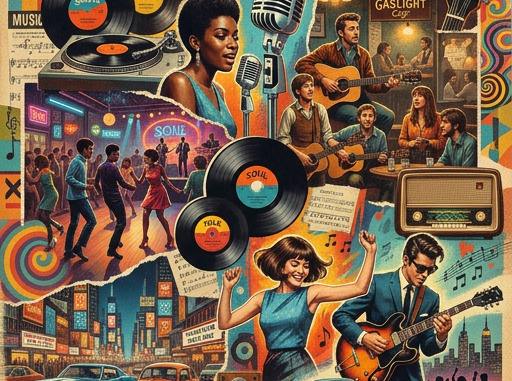
The 1960s have presented us with an unusual dilemma. Our preference has always been to venture beyond the familiar, uncovering exceptional music that history—and oldies radio—may have overlooked. Yet this particular collection comes dangerously close to resembling a greatest-hits compilation. And frankly, we’re not going to apologize for it.
The truth is that the 1960s produced an extraordinary concentration of popular music that genuinely deserved its popularity. These weren’t merely successful records; many fundamentally changed what popular music could sound like. From the elegance of early-decade pop and soul to the increasingly adventurous sounds of rock and psychedelia, the transformation was remarkable.
There are still a few surprises tucked into the proceedings, but this time we’re allowing the classics to have their say. Sometimes the obvious choices are obvious for a reason.
These songs simply could not be denied.
| # | Song | Artist | Year |
|---|---|---|---|
| 1 | Only the Lonely | Roy Orbison | 1960 |
| 2 | Save the Last Dance for Me | The Drifters | 1960 |
| 3 | She’s Got You | Patsy Cline | 1962 |
| 4 | Twistin’ the Night Away | Sam Cooke | 1962 |
| 5 | Walk On By | Dionne Warwick | 1964 |
| 6 | Ticket to Ride | The Beatles | 1965 |
| 7 | Woman’s Got Soul | The Impressions | 1965 |
| 8 | California Dreamin’ | The Mamas & The Papas | 1965 |
| 9 | Summer in the City | The Lovin’ Spoonful | 1966 |
| 10 | Reach Out I’ll Be There | The Four Tops | 1966 |
| 11 | Tomorrow Never Knows | The Beatles | 1966 |
| 12 | Waterloo Sunset | The Kinks | 1967 |
| 13 | I Wish It Would Rain | The Temptations | 1967 |
| 14 | White Rabbit | Jefferson Airplane | 1967 |
| 15 | I Heard It Through the Grapevine | Marvin Gaye | 1968 |
| 16 | (Sittin’ On) The Dock of the Bay | Otis Redding | 1968 |
| 17 | Time of the Season | The Zombies | 1968 |
| 18 | Peaches en Regalia | Frank Zappa | 1969 |
| 19 | Come Together | The Beatles | 1969 |

1. Only the Lonely – Roy Orbison (1960)
Roy Orbison opens our journey through the 1960s with a voice seemingly designed for heartbreak. At a time when much of mainstream rock and roll still emphasized youthful energy, romance, and danceable rhythms, Orbison brought an unusually dramatic and vulnerable approach to the pop charts, treating romantic disappointment with an intensity more commonly associated with grand ballads.
“Only the Lonely” begins with those unmistakable dum-dum-dum-dumby-doo-wah backing vocals before Orbison delivers a performance of remarkable vulnerability and control. Rather than relying on a conventional verse-chorus arrangement, the song builds toward an increasingly dramatic climax, allowing his extraordinary vocal range to carry the emotional weight.
What’s particularly impressive is how timeless the recording sounds. The spacious production, elegant orchestration, and restrained accompaniment leave plenty of room for Orbison’s magnificent voice.
It’s a fitting introduction to a decade that would radically expand the possibilities of popular music. Before the experimentation, the psychedelia, and the studio wizardry, there was already an artist demonstrating just how much could be accomplished with a great melody and an extraordinary voice.
2. Save the Last Dance for Me – The Drifters (1960)
Few songs capture the complicated relationship between romance, trust, and insecurity as elegantly as “Save the Last Dance for Me.” Recorded by the Drifters with Ben E. King on lead vocals, this irresistible combination of Latin-influenced rhythm, lush orchestration, and heartfelt singing disguises a surprisingly poignant emotional predicament.
The narrator encourages his sweetheart to dance with other men, enjoy herself, and embrace the evening…provided she remembers who’s taking her home. It’s a remarkable mixture of generosity and possessiveness, delivered with such warmth that the tension almost disappears beneath the melody.
Songwriter Doc Pomus reportedly drew inspiration from his own wedding, where he watched his bride dance while his disability prevented him from joining her. That background lends the lyrics an additional layer of tenderness.
Producer Jerry Leiber and Mike Stoller’s polished arrangement helped establish a sophisticated sound that would become increasingly influential throughout the decade. Sixty years later, the song remains an almost perfect marriage of emotional complexity and effortless musical pleasure.
3. She’s Got You – Patsy Cline (1962)
Patsy Cline had an extraordinary ability to make heartbreak sound dignified, even when the emotions beneath the surface were anything but. Written by Hank Cochran, “She’s Got You” approaches romantic loss from a particularly devastating angle: the singer still possesses all the physical reminders of a relationship, but someone else now has the person who gave them meaning.
Cline’s rich, expressive contralto navigates the song with remarkable restraint, allowing subtle changes in phrasing to convey feelings that a more theatrical performance might overwhelm. Producer Owen Bradley surrounds her with the polished instrumentation of the Nashville Sound, blending country sentiment with sophisticated pop arrangements.
What makes the recording especially effective is its simplicity. The melody is beautiful, the lyrics are direct, and the emotional contradiction is instantly recognizable.
It’s also a reminder that some of the finest recordings of the early 1960s emerged from Nashville, where artists like Cline were demonstrating that country music could achieve extraordinary emotional depth without sacrificing mainstream accessibility.
4. Twistin’ the Night Away – Sam Cooke (1962)
After three songs exploring various shades of romantic disappointment, Sam Cooke arrives with a considerably more cheerful proposition: forget your troubles and get out on the dance floor.
Released at the height of the Twist craze, “Twistin’ the Night Away” could easily have been another disposable dance novelty. Instead, Cooke transforms it into an irresistible celebration of music, movement, and good company. His effortless vocal delivery makes the festivities sound spontaneous, while the swinging horns, lively rhythm section, and infectious melody keep the entire production bubbling with energy.
Cooke was one of popular music’s great bridges between gospel, rhythm and blues, and mainstream pop. Here, his gospel-trained voice brings warmth and personality to a song that asks nothing more complicated of its audience than having a wonderful time.
And sometimes that’s quite enough. Not every great record needs to explore the human condition. Occasionally, getting everybody onto the dance floor is accomplishment enough.
5. Walk On By – Dionne Warwick (1964)
If heartbreak could be arranged with mathematical precision, it might sound something like “Walk On By.” Written by Burt Bacharach and Hal David, this extraordinary recording transforms the simple anguish of encountering a former lover into one of the most sophisticated pop performances of the decade.
Bacharach’s arrangement is a marvel of shifting rhythms, unexpected accents, and elegant orchestration. The strings swell, the piano punctuates, and the rhythm section moves with a subtle restlessness that perfectly complements the song’s emotional uncertainty. Through it all, Dionne Warwick delivers a beautifully controlled performance, revealing vulnerability without surrendering her composure.
The genius lies in the contrast between the music’s sophistication and the lyrics’ painfully direct request: if you see me crying, please pretend you haven’t.
“Walk On By” demonstrates that popular music was becoming increasingly adventurous well before psychedelia arrived. Complexity didn’t have to come at the expense of melody, and few partnerships understood that better than Bacharach, David, and Warwick.
6. Ticket to Ride – The Beatles (1965)
By 1965, the Beatles were beginning to demonstrate that their musical ambitions extended well beyond the exuberant pop songs that had made them international sensations. “Ticket to Ride” marks a particularly compelling step forward, combining an unforgettable guitar figure, an unusually heavy rhythmic feel, and a distinctly melancholy atmosphere.
The recording’s most striking feature is Ringo Starr’s unconventional drum pattern, which gives the song a deliberate, almost lumbering momentum. Against that foundation, the guitars ring out with remarkable clarity while John Lennon’s vocal conveys a mixture of resignation and wounded disbelief.
Even the songwriting resists expectations. The shifting rhythms and extended ending create a sense of movement that distinguishes the track from the group’s earlier singles.
“Ticket to Ride” isn’t quite the psychedelic revolution that would follow, but it signals an important change. The Beatles were discovering that a three-minute pop record could be adventurous, emotionally ambiguous, and commercially irresistible…all at once.
7. Woman’s Got Soul – The Impressions (1965)
Curtis Mayfield and the Impressions had a remarkable gift for making sophisticated music sound effortless. “Woman’s Got Soul” is a shining example, blending gospel-inspired harmonies, an irresistible rhythm, and Mayfield’s unmistakable falsetto into a celebration of feminine character that goes considerably deeper than physical attraction.
Rather than praising conventional beauty, Mayfield admires a woman for her warmth, understanding, and inner strength. It’s an affectionate sentiment delivered without grandstanding, and the group’s beautifully interwoven vocals give the recording an almost conversational intimacy.
Musically, the song occupies a fascinating position between the polished elegance of early-1960s soul and the more rhythmically adventurous sounds that would emerge later in the decade. The understated instrumental arrangement leaves room for the melody and those glorious vocal harmonies to do most of the work.
It’s also a reminder that musical sophistication doesn’t necessarily require dramatic production or instrumental fireworks. Sometimes the most impressive artistry is the kind that makes everything sound perfectly natural.
8. California Dreamin’ – The Mamas & The Papas (1965)
Few songs capture the peculiar melancholy of the 1960s quite like “California Dreamin’.” Written by John and Michelle Phillips, this beautifully constructed folk-rock classic transforms a longing for warmer weather into something considerably more evocative: the restless desire to escape one’s surroundings and find a better place, whether geographical or emotional.
The Mamas & The Papas deliver their signature vocal harmonies with remarkable precision, creating a rich, almost haunting atmosphere. The driving acoustic guitar, prominent bass, and unexpectedly expressive alto flute solo give the recording a distinctive character that separates it from more conventional folk-pop.
What makes the song extraordinary is the tension between its inviting melody and underlying sadness. California represents sunshine and possibility, yet the music never quite escapes the chill of the winter landscape.
It’s an ideal introduction to the increasingly introspective sounds of the mid-1960s, when popular music was beginning to explore the complicated emotions hiding beneath its sunny exterior.

9. Summer in the City – The Lovin’ Spoonful (1966)
If “California Dreamin’” offered an escape from winter’s chill, “Summer in the City” presents the opposite problem: an urban heat wave so oppressive that even the pavement seems ready to surrender. The Lovin’ Spoonful abandon their customary good-natured folk-pop charm for something considerably grittier and more aggressive.
John Sebastian’s urgent vocals ride a pounding rhythm, muscular electric keyboards, and a driving bass line, while car horns and jackhammers introduce the sounds of the city directly into the recording. The contrast between the sweltering daytime verses and the more relaxed, romantic nighttime passages gives the song an unusually effective sense of atmosphere and movement.
What makes “Summer in the City” remarkable is how completely it captures a physical sensation. You can practically feel the heat rising from the sidewalk.
It’s also another indication of how rapidly popular music was evolving. By 1966, even an established hit-making group could transform a straightforward pop song into an inventive little piece of urban sound design.
10. Reach Out I’ll Be There – The Four Tops (1966)
Few recordings announce themselves with the urgency and dramatic intensity of “Reach Out I’ll Be There.” From its distinctive flute introduction and galloping percussion to Levi Stubbs’ commanding lead vocal, this Motown masterpiece sounds less like a conventional love song than an emotional rescue mission.
Written and produced by Holland–Dozier–Holland, the song combines an unusually forceful rhythmic arrangement with a message of unwavering reassurance. Stubbs practically shouts his promises of devotion, while the other Four Tops answer with tightly arranged harmonies that heighten the tension. The result is both exhilarating and deeply affecting.
What’s remarkable is how many musical ideas the producers pack into three minutes without sacrificing a memorable melody or infectious groove. The orchestration is busy, the dynamics constantly shift, and yet everything serves the song.
By 1966, Motown had perfected the art of making sophisticated, adventurous recordings irresistible to mainstream audiences. “Reach Out I’ll Be There” remains one of its most spectacular achievements.

11. Tomorrow Never Knows – The Beatles (1966)
If “Ticket to Ride” suggested that the Beatles were growing restless with conventional pop music, “Tomorrow Never Knows” announced that they had thrown the rulebook out the window. Closing Revolver, this astonishing recording sounds remarkably futuristic even today, with its hypnotic drum pattern, droning instrumentation, backward guitar, and swirling tape loops creating an atmosphere unlike almost anything else on the pop charts.
John Lennon’s heavily processed vocal, inspired by Timothy Leary’s interpretation of The Tibetan Book of the Dead, floats above the musical turbulence like a disembodied voice broadcasting from another dimension. Yet beneath the studio experimentation lies an extraordinarily simple musical foundation, built around a largely unchanging chord and relentless rhythmic pulse.
That’s the real achievement: the Beatles transformed radical experimentation into something genuinely compelling to hear. “Tomorrow Never Knows” didn’t merely stretch the boundaries of popular music. It suggested that the recording studio itself could become an instrument, opening possibilities that musicians would explore for decades.
12. Waterloo Sunset – The Kinks (1967)
After the sonic upheaval of “Tomorrow Never Knows,” the Kinks offer a gentler kind of musical revelation. Ray Davies’ “Waterloo Sunset” finds extraordinary beauty in an ordinary London evening, transforming the view from a bridge over the Thames into one of the decade’s most affecting portraits of solitude, contentment, and quiet observation.
Davies narrates the scene as an outsider, watching the crowds and the romantic encounters of Terry and Julie while remaining perfectly happy in his own company. The shimmering guitar, delicate harmonies, and unhurried melody create a dreamlike atmosphere without relying on elaborate studio effects.
What makes the song especially remarkable is its emotional ambiguity. Is the narrator lonely, or has he discovered a kind of happiness that requires nothing from anyone else? Davies wisely leaves that question unanswered.
“Waterloo Sunset” demonstrates that popular music’s expanding possibilities weren’t limited to experimentation and spectacle. Sometimes artistic sophistication meant finding something profound in the simplest human experience: watching the world go by.
13. I Wish It Would Rain – The Temptations (1967)
The Temptations were masters of polished Motown sophistication, but “I Wish It Would Rain” reveals the remarkable emotional depth beneath that immaculate presentation. Led by David Ruffin’s aching, expressive vocal, the song portrays a man so devastated by romantic loss that he wishes for rain to conceal the tears he feels unable to shed in public.
Written by Norman Whitfield, Barrett Strong, and Roger Penzabene, the recording combines an irresistible melody with a beautifully restrained arrangement. Gentle piano figures, orchestral flourishes, and the group’s impeccable harmonies provide an elegant backdrop for Ruffin’s increasingly desperate performance.
The song carries an especially poignant history: lyricist Roger Penzabene drew upon his own marital difficulties and died by suicide shortly after its release.
Yet the recording never feels overwhelmed by tragedy. Its beauty lies in the contrast between musical grace and emotional anguish, demonstrating how Motown could transform intensely personal suffering into something universally moving.

14. White Rabbit – Jefferson Airplane (1967)
Few recordings capture the unsettling atmosphere of 1960s psychedelia as brilliantly as Jefferson Airplane’s “White Rabbit.” Drawing upon Lewis Carroll’s Alice’s Adventures in Wonderland and Through the Looking-Glass, Grace Slick transforms familiar childhood imagery into a provocative exploration of altered consciousness, curiosity, and the contradictions of conventional morality.
The music is every bit as remarkable as the lyrics. Inspired by the dramatic structure of Maurice Ravel’s Boléro, the arrangement builds steadily from an ominous, almost hypnotic opening toward an explosive climax. Rather than following a conventional verse-chorus format, the entire recording unfolds as one continuous crescendo, driven by insistent percussion, dark instrumental textures, and Slick’s commanding vocal.
At just over two minutes, “White Rabbit” accomplishes more than many extended psychedelic excursions. It’s eerie, disciplined, memorable, and surprisingly accessible.
And unlike the cheerful escapism often associated with the Summer of Love, this particular trip offers little reassurance. Wonderland has become a considerably more disturbing destination.
15. I Heard It Through the Grapevine – Marvin Gaye (1968)
Few recordings capture suspicion, jealousy, and romantic betrayal with the simmering intensity of Marvin Gaye’s “I Heard It Through the Grapevine.” Written by Norman Whitfield and Barrett Strong, the song had already been a hit for Gladys Knight & the Pips, but Gaye’s interpretation transformed it into something darker, moodier, and altogether more unsettling.
The recording unfolds around a hypnotic bass line, insistent percussion, eerie organ textures, and dramatic string arrangements. Gaye’s extraordinary vocal performance moves between wounded disbelief and barely contained desperation, conveying the anguish of discovering a lover’s infidelity through rumors rather than an honest confession.
What makes the song particularly compelling is its atmosphere of unresolved tension. Even as the melody becomes increasingly familiar, the arrangement never quite allows the listener to relax.
By 1968, Motown was moving beyond its earlier formula of polished romantic pop. “Grapevine” demonstrated that a commercially irresistible record could also be psychologically complex, rhythmically adventurous, and genuinely haunting.
16. (Sittin’ On) The Dock of the Bay – Otis Redding (1968)
Few recordings convey quiet resignation as beautifully as Otis Redding’s “(Sittin’ On) The Dock of the Bay.” Departing from the explosive vocal intensity that characterized many of his earlier performances, Redding adopts a relaxed, almost conversational delivery, portraying a man who has traveled far only to find himself wondering where he belongs.
Co-written with guitarist and producer Steve Cropper, the song combines a gently rolling rhythm, warm instrumentation, and atmospheric sounds of waves and seabirds. Its understated arrangement leaves plenty of room for Redding’s magnificent voice, while the famous whistled ending lends the recording an unusual sense of unfinished reflection.
Tragically, Redding died in a plane crash in December 1967, shortly after recording the song. Released posthumously, it became his first number-one pop hit.
What makes the recording so enduring is its emotional simplicity. Beneath that deceptively carefree melody lies a profound sense of displacement, uncertainty, and the universal longing to find somewhere peaceful to rest.
17. Time of the Season – The Zombies (1968)
Few songs capture the seductive, slightly mysterious atmosphere of the late 1960s as effortlessly as the Zombies’ “Time of the Season.” Built around an unforgettable bass line, crisp percussion, handclaps, and Colin Blunstone’s cool, almost teasing vocal, the recording manages to sound both intimate and faintly otherworldly.
Written by keyboardist Rod Argent, the song balances an irresistibly simple groove with unexpected musical sophistication. Argent’s swirling organ solos introduce a distinctly jazzy flavor, while the band’s carefully arranged harmonies provide flashes of dramatic intensity. The famous question-and-answer passages give the performance a playful, almost theatrical quality.
Originally released on the group’s Odessey and Oracle album, “Time of the Season” became a major American hit in 1969, after the Zombies had already disbanded.
It’s a wonderfully distinctive recording that bridges the elegance of 1960s pop with the more adventurous sounds waiting just around the corner. Sophisticated, sensual, and just a little strange, it remains one of the decade’s most enduring pleasures.
18. Peaches en Regalia – Frank Zappa (1969)
Just when our journey through the 1960s seems to have explored every imaginable musical direction, Frank Zappa arrives to demonstrate that we’ve barely scratched the surface. “Peaches en Regalia,” the opening track from his largely instrumental album Hot Rats, is a dazzling collision of jazz, rock, orchestral sophistication, and Zappa’s wonderfully eccentric musical imagination.
Rather than developing around a conventional verse and chorus, the composition moves through a succession of colorful melodic themes, rhythmic surprises, and intricate instrumental passages. Keyboards, guitars, percussion, and unusually arranged wind instruments weave together into something that sounds meticulously constructed yet delightfully unpredictable.
What makes the recording especially impressive is its accessibility. Despite the complexity, the melodies are remarkably engaging, and the constantly shifting arrangements never lose their sense of playful momentum.
At just over three minutes in its original album version, “Peaches en Regalia” packs an extraordinary amount of musical invention into a remarkably compact package. It’s a fitting reminder that as the decade ended, popular music’s possibilities were expanding far beyond anything its early pioneers could have imagined.

19. Come Together – The Beatles (1969)
As our journey through the 1960s draws to a close, the Beatles provide a fitting demonstration of just how far popular music had traveled in ten extraordinary years. “Come Together” replaces the youthful exuberance of their early hits with something darker, funkier, and considerably more mysterious.
John Lennon’s cryptic lyrics unfold over Paul McCartney’s wonderfully elastic bass line, Ringo Starr’s inventive drumming, and a sparse, blues-inflected arrangement that practically oozes confidence. George Harrison’s understated guitar work adds texture without disturbing the hypnotic groove. The result is a recording that sounds simultaneously relaxed and meticulously constructed.
The lyrics may resist logical interpretation, but that’s hardly the point. By 1969, the Beatles had become masters of creating atmosphere through rhythm, sound, and sheer musical personality.
It’s an appropriate conclusion to a decade that began with polished pop and romantic ballads and ended with musicians challenging nearly every convention of popular recording. The revolution wasn’t merely in what songs could say, but in how astonishingly different they could sound.
Leave a Reply